Mt. Everest Expedition — Premium

Everest Expeditions

Mt. Everest Expedition — Premium

  • 8,849 m
  • 65 days
  • challenging
  • Spring expedition season (April–May)

Overview

About this journey

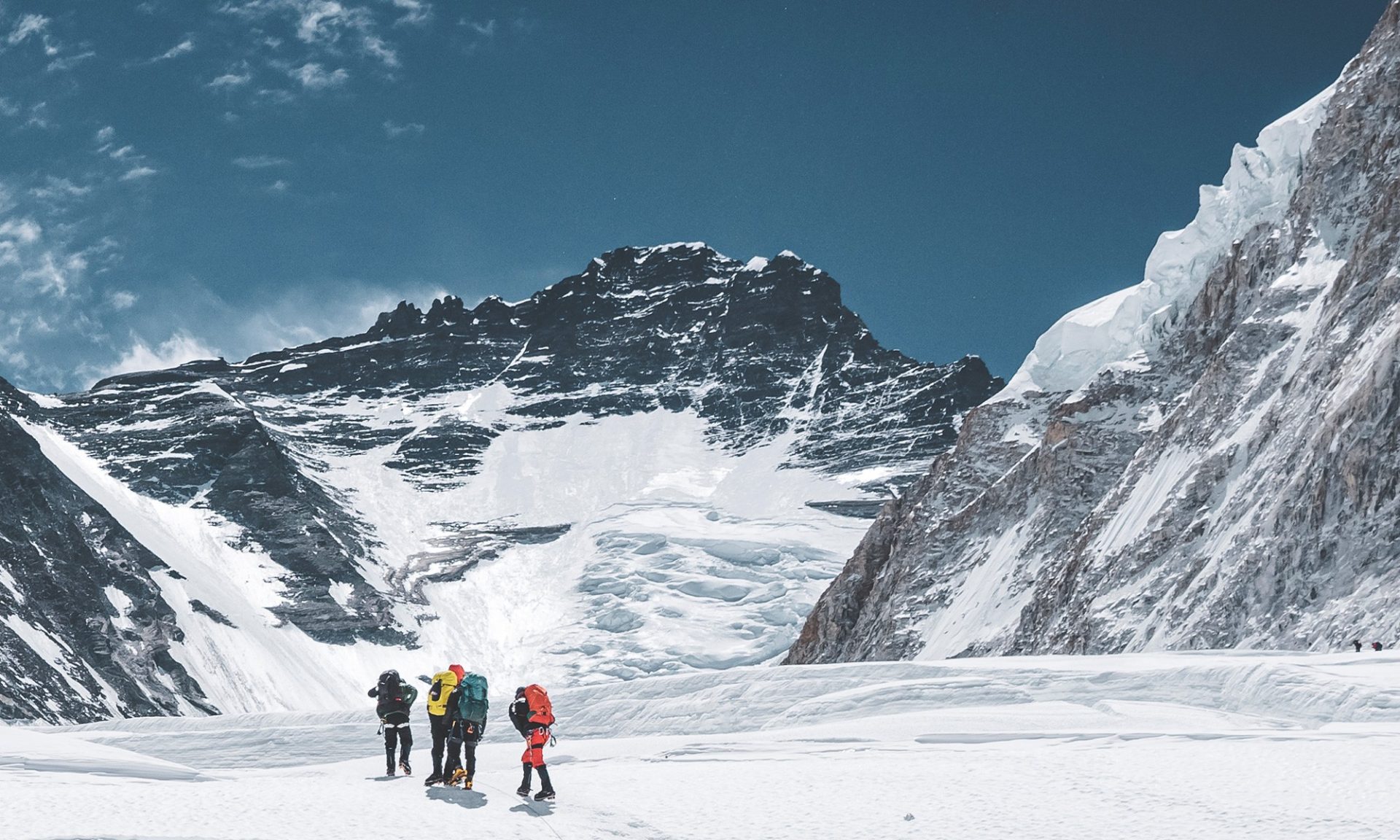
Our enhanced Everest programme. 1:1 Sherpa support, extra oxygen, and personal-tent comfort at Base Camp. The right tier for first-time 8,000m climbers or any experienced climber who wants more margin on the mountain.

What's included

  • 1 dedicated climbing Sherpa per client above Base Camp
  • 7 oxygen bottles per client (vs. 5 in Standard)
  • Personal climbing tent at Base Camp — no shared tents
  • Higher-grade down suit and 8,000m boot allocation
  • Heated mess tent at Base Camp with private dining option
  • Optional helicopter return from Pheriche or Lukla post-summit
  • All permits, royalty, insurance, and rescue coordination
  • Premium pre- and post-expedition hotel in Kathmandu (5★)

Who this fits

First-time 8,000m climbers who want maximum margin without going full luxury. Also: experienced climbers who've previously summited at the Standard tier and want to upgrade their support for a faster, more comfortable expedition.

How this differs from Standard

The summit objective and route are identical. What changes is the level of personal support, oxygen allocation, and base camp comfort. With 1:1 Sherpa-to-client ratio and 40% more oxygen, the Premium tier gives you noticeably more margin both above the South Col and on summit day.

Key Highlights

What makes this journey stand out

  • 1:1 Dedicated Sherpa Above Base Camp

    A personal climbing Sherpa accompanies you through the Khumbu Icefall, on every rotation, and on summit day — giving you maximum margin for safety, pacing and rope-fixing assistance.

  • 40% More Oxygen Than Standard

    7 bottles of oxygen per climber (versus 5 in Standard) plus an emergency reserve. More oxygen means more margin above the South Col, a longer summit window, and an easier descent.

  • Personal Tent & Heated Mess at Base Camp

    A private climbing tent — no shared sleeping during the long Base Camp rotations — plus a heated dining tent with an optional private dining area for genuine recovery between rotations.

  • UIAGM/IFMGA Expedition Leadership

    Your expedition is led by a fully-certified UIAGM/IFMGA mountain guide with multiple Everest summits — the highest international qualification in mountain guiding.

  • Optional Helicopter Return After Summit

    Skip the multi-day return trek from Base Camp — fly directly from Pheriche or Lukla to Kathmandu and start recovery 48 hours after summit (weather permitting).

Itinerary

Your day-by-day route

Costs Include

What's covered

  • Arrival & departure: airport pick-up and drop-off in Kathmandu, private vehicle.

  • Accommodation: 5 nights in a 5-star hotel in Kathmandu (single room, bed & breakfast) pre- and post-expedition.

  • Welcome and farewell dinner in a tourist-standard restaurant in Kathmandu.

  • Permits: Mt. Everest climbing permit and royalty, Sagarmatha National Park entry permit, Pasang Lhamu Rural Municipality entry permit, and Khumbu Icefall (SPCC) fee.

  • Domestic flights: Kathmandu–Lukla–Kathmandu, including domestic airport taxes.

  • All ground transportation in Nepal by private vehicle as per itinerary.

  • Three meals a day (breakfast, lunch and dinner) during the trek and at Base Camp, prepared by our expedition kitchen.

  • Lodge accommodation (sharing) during the trek to and from Base Camp.

  • Personal climbing tent at Base Camp — no shared sleeping tents.

  • Heated dining tent at Base Camp with private dining option available.

  • Shared expedition tents (2-person) at Camps 1, 2, 3 and 4.

  • Dedicated 1:1 climbing Sherpa per client above Base Camp (significantly higher ratio than Standard).

  • 7 bottles of supplementary oxygen per client (vs. 5 in Standard) — 4 L masks + regulators.

  • Additional oxygen reserve for emergencies and contingency.

  • Higher-grade 8 000 m down suit and 8 000 m boot allocation for the expedition (to keep).

  • High-altitude tents, ropes, ice screws, snow bars, deadman anchors and all fixed-line equipment.

  • Mountain gas, kerosene and cooking fuel at all camps.

  • Solar power and battery charging facility at Base Camp.

  • Satellite phone for emergencies (paid calls available).

  • Internet access at Base Camp (limited bandwidth).

  • Government-licensed UIAGM/IFMGA expedition leader.

  • Base Camp manager, cook, kitchen crew and high-altitude porters.

  • Salary, food, lodging, insurance, equipment and bonuses for all Sherpas and expedition staff.

  • Government Liaison Officer with full equipment, salary and insurance.

  • Comprehensive medical kit at Base Camp; doctor on call.

  • Hyperbaric chamber (Gamow bag) at Base Camp for altitude emergencies.

  • Pulse oximeter and oxygen cylinders available throughout the trek and expedition.

  • Rescue and evacuation coordination (helicopter rescue costs covered by your insurance).

  • Optional helicopter return from Pheriche or Lukla to Kathmandu after summit (subject to weather and availability).

  • Garbage deposit fee and full Leave-No-Trace expedition cleanup.

  • Sherpalaya duffel bag, expedition t-shirt and summit certificate.

  • All government taxes, VAT and office service charges.

Costs Exclude

Not included

  • International airfare to and from Kathmandu.

  • Nepal entry visa fee (available on arrival at Kathmandu airport).

  • Personal travel and medical insurance with emergency helicopter evacuation cover up to 8 850 m (mandatory).

  • Lunch and dinner in Kathmandu (except the welcome and farewell dinners).

  • Personal climbing and trekking gear (sleeping bag -40 °C, harness, ice axe, crampons, climbing helmet etc.). Rentals available in Kathmandu on request.

  • Bottled and canned drinks, alcohol, snacks and any food or drink outside the standard expedition menu.

  • Personal communications: satellite phone calls, additional internet bandwidth.

  • Summit bonus for Sherpas (customary: USD 1 500–2 000 if summit is reached).

  • Tips for guide, cook, kitchen crew and porters (customary: USD 600–1 000 per climber for the full expedition).

  • Excess baggage charges on domestic flights (15 kg + 5 kg hand luggage allowance per person).

  • Extra hotel nights or flight changes caused by domestic flight delays (common in Lukla due to weather).

  • Emergency rescue, hospital and repatriation costs (covered by your insurance).

  • Optional Khumbu Cough medication and personal medical prescriptions.

  • Anything not specifically listed under "Costs include".

Essential Tips

Things worth knowing before you go

Pre-Acclimatise on a 6 000 m Peak First

Summit at least one 6 000 m peak (Lobuche, Island Peak, Aconcagua) and ideally one 7 000 m peak in the year prior. Premium support is not a substitute for high-altitude experience.

Insurance Must Cover Helicopter Evacuation to 8 850 m

Standard travel insurance won't cover Everest. Use a specialist policy (Global Rescue, Ripcord, IHI Bupa) with explicit cover for high-altitude helicopter evacuation, repatriation and trip cancellation.

Train Cardio + Load-Carrying for 9 Months

Aim for 4–6 sessions a week: long uphill hikes carrying 15 kg, gym strength (legs, core, back), and zone-2 cardio. The mountain rewards slow, repeated, well-fuelled effort — not gym power.

Plan Around the Weather Window, Not the Calendar

The summit window is usually 5–10 days in mid-to-late May. Build flexibility into your post-expedition flights — never book a tight return. Our leader makes the summit-day call with the meteo team.

Bring Your Own Boots — Rent Everything Else

Your 8 000 m boots are the one item you must own and have broken in. Down suit, sleeping bag, harness and most hardware can be rented in Kathmandu at lower cost than buying new.

Ready when you are

Your Himalayan chapter starts with a conversation.

Tell us where you want to go — we'll handle the rest.